If you’ve ever dreamed of building your own custom game map, from a cozy open-world village to a fast-paced multiplayer deathmatch arena, the first hurdle you’ll run into is navigating the tool’s interface. This map editor UI guide breaks down everything you need to know to stop fumbling with menus and start turning your creative ideas into playable content, even if you’ve never touched a map building tool before. You don’t need advanced coding or design skills to get great results, just a clear understanding of how the UI is organized and how to tweak it to fit your workflow.
Core Layout Rules to Follow in Any Map Editor UI Guide
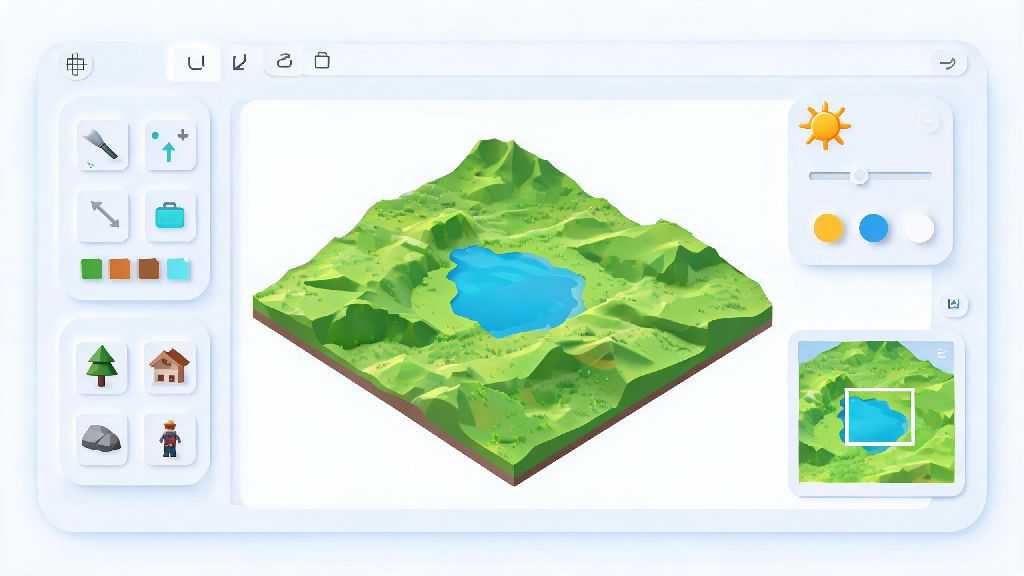
Nearly every map editing tool on the market follows the same basic layout structure, even if the visual design changes across platforms. As this map editor UI guide notes earlier, the default layout is rarely optimized for individual use, so learning the core panels first makes it easy to rearrange them to fit your needs. Always lock your base terrain layer first before adding any decorative assets, so you don’t accidentally move or delete it when you’re editing smaller details. Customize your panel positions within the first 10 minutes of using a new editor, instead of forcing yourself to work with the default layout that might not fit your dominant hand or screen size.
Most new users skip adjusting the UI layout entirely, but even small tweaks like moving the asset library to the side of your dominant hand can cut your build time by 30% or more. You can also save custom layout presets if you work on different types of maps, like one for open-world builds and another for linear puzzle maps.
Shortcut Customization Hacks to Speed Up Your Workflow
Default keyboard shortcuts are made for general use, but they rarely align with the specific actions you use most when building maps. For example, if you spend 80% of your time placing and resizing trees, you don’t want to have to click through three menus every time to switch to the resize tool. The best map editor UI guide resources always emphasize shortcut customization as one of the fastest ways to improve your build speed. Set custom shortcuts for your 5 most used actions first, before you start building, so you don’t get stuck falling back on slow menu navigation.
If you take short breaks between long build sessions to rest your eyes and avoid creative burnout, you might already be familiar with casual quick-play games that fit into 5-minute gaps. Players who switch between map building and casual games to reset their focus often play Rummy888 during those breaks, as its fast round structure lets you step away from your design work completely without getting pulled into a long game that eats into your build time. Once you have your core shortcuts set, test them for 15 to 20 minutes on a blank test map to make sure they feel intuitive, and adjust any that feel awkward to press with your hand position on the keyboard.
Avoid setting shortcuts that require you to stretch your fingers across the keyboard for frequently used actions, as that can lead to hand strain during long build sessions. Turn on shortcut tooltips for the first few weeks of using a new editor, so you can learn the default shortcuts alongside your custom ones for actions you use less often.
Common UI Mistakes That Slow Down New Map Builders
Even if you know the basic layout, there are small UI mistakes that most new creators make that add hours of extra work to their build process. One of the most common is leaving too many panels open at once, which shrinks your main viewport and makes it harder to see small details on your map. You don’t need to have the properties panel open all the time, for example, you can toggle it open only when you need to adjust an asset’s settings.
Another common mistake is ignoring filter settings in the asset library. If you’re looking for a specific type of tree, scrolling through thousands of unrelated assets every time wastes a huge amount of time. Use tag filters and search bars in your asset library to pull up exactly what you need in seconds, instead of scrolling through pages of irrelevant content. You should also avoid zooming in and out constantly to check small details, most editors have a built-in minimap or quick jump feature that lets you move between sections of your map in one click. If you find yourself making the same adjustment to dozens of assets at once, look for the bulk edit tool in the UI, it’s usually hidden in a right-click menu that most new users never notice.
How to Test Your UI Tweaks for Maximum Efficiency
Once you’ve adjusted your layout, set custom shortcuts, and turned off unnecessary UI elements, you need to test those changes to make sure they actually improve your workflow instead of making it harder. Start by completing a small, timed build task, like placing 20 trees and adjusting their size and position, with both the default UI and your custom UI to see which one is faster. If your custom setup is slower, look for which tweaks are causing the delay, it might be that you set a shortcut to a key that’s hard to reach, or you moved a panel you use more often than you thought.
You should also test your UI setup with different types of build tasks, because a layout that works great for placing terrain might be terrible for setting up multiplayer spawn points and trigger zones. Ask other map builders to test your UI preset if you share your workflow online, they might point out small tweaks you missed that make the layout work better for a wider range of use cases. Don’t be afraid to adjust your UI over time, as your build skills improve and you start working on more complex maps, your workflow needs will change, and your UI should change with them.
Building custom game maps is one of the most fun and rewarding parts of being part of a gaming community, and you don’t need expensive tools or advanced skills to make maps that other players love. This map editor UI guide gives you all the foundational information you need to stop fighting with your tool’s interface and focus on the creative part of map building. Even small tweaks to your layout, shortcuts, and workflow can cut your build time in half, so you can spend more time refining your map and less time clicking through menus. Start with one small change this week, like setting custom shortcuts for your most used actions, and you’ll be shocked at how much faster your builds go.