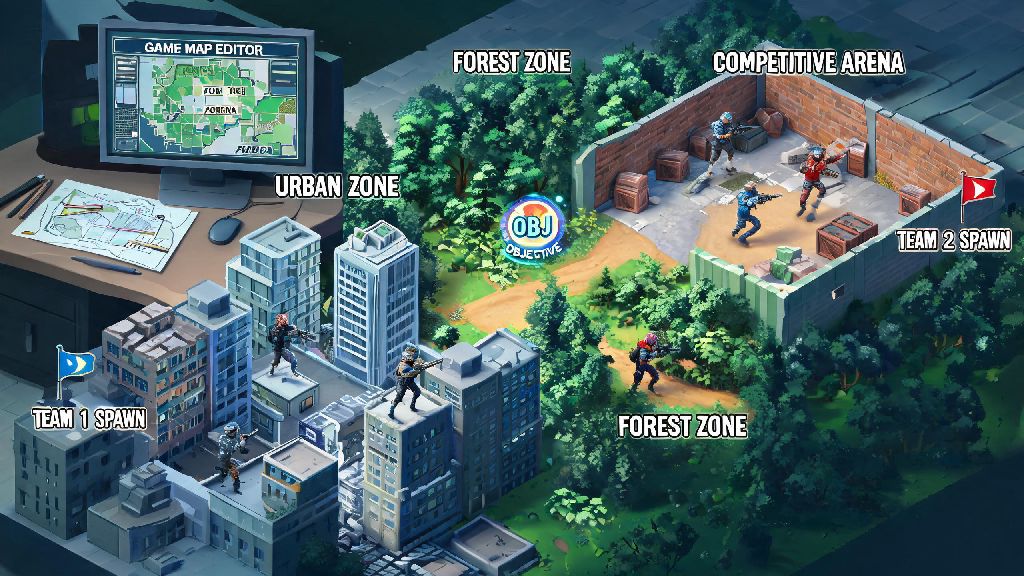
If you’ve ever spent hours playing a custom game map only to quit halfway because it’s too confusing, too easy, or just plain boring, you know how big a difference good design makes. Whether you’re building maps for sandbox games, competitive shooters, or casual party titles, mastering basic map building tricks can turn your half-baked draft into a map that thousands of players come back to again and again. I’ve built over 40 custom maps across 7 different games in the last 3 years, and I’ve made every mistake in the book so you don’t have to. The tips below work for every skill level, and you don’t need any fancy paid tools to use them.
Core Map Building Tricks to Nail Basic Playability First
It’s tempting to jump straight to adding cool scenery and fun Easter eggs when you start a new map, but playability always comes first. A pretty map that’s frustrating to play will never get as much traction as a simple, well-designed map that feels good to move through. I learned this the hard way with my first custom shooter map, where I spent 12 hours designing a detailed cyberpunk city, only to find 80% of playtesters quit within 5 minutes because they couldn’t find the objective points. Before you add any decorative elements, run through these core checks first:
After you run through these checks yourself, have a friend who hasn’t seen the map test it without any guidance. If they get lost within the first 2 minutes, you need to adjust your navigation cues. Don’t assume that just because you know where everything is, other people will too. That mistake alone cut playtime on my first 10 maps by nearly 70% compared to my later designs.
Optimize Your Map’s Flow to Keep Players Engaged
Flow is the unspoken rhythm of your map that pushes players to keep moving without feeling forced. A lot of new builders treat maps like static displays, but the best maps guide players through a natural sequence of challenges, rest spots, and rewards that feel entirely organic. For example, if you’re building a competitive shooter map, place a high-value loot item at the end of a tight corridor that opens up into a wide courtyard with multiple cover spots. That creates a natural risk-reward loop that makes players want to revisit that area again and again. If you’re making a casual puzzle map, place small hints along the path to the next puzzle so players never feel stuck for too long.
If you want to speed up your build process without sacrificing flow, curated free custom map asset packs can help you add consistent themed details without spending hours creating each item from scratch. Just make sure you pick assets that match your map’s core theme, so you don’t end up with a medieval castle that has random neon street signs scattered around it. Your flow should match your target genre — casual party maps can have more silly, unexpected detours, while competitive ranked maps need tight, predictable flow that doesn’t give any player an unfair advantage.
Avoid Common Aesthetic Mistakes That Ruin Immersion
Aesthetics don’t matter more than playability, but bad aesthetic choices can break even the most well-designed map. You don’t need hyper-realistic textures to make a map feel immersive, but you do need consistent theming and small, intentional details that make the world feel lived in. For example, if you’re building a post-apocalyptic city map, add small details like half-empty soda cans, overturned park benches, and faded graffiti to make the space feel real, instead of just a blank set of walls and roads. These small touches take barely any extra time to add, but they make players feel like they’re in a real world instead of a generic game level.
Don’t overcrowd your map with unnecessary details — too many small props can cause performance lag on lower-end devices, and can also distract players from navigation cues and core gameplay elements. I once added 300 small decorative plants to a forest map, only to find that 20% of playtesters reported frame drops below 30 FPS when they walked through that area. I cut 80% of the plants, kept the ones that marked paths, and the lag issues disappeared entirely without making the forest feel empty. You can also use lighting to your advantage: dimmer lighting in hidden areas and brighter lighting around key points of interest will naturally draw players where you want them to go, without any explicit instructions.
Test and Iterate Fast to Perfect Your Design
Even the most experienced map builders don’t get their design right on the first try. The biggest difference between a mediocre map and a viral one is how much testing and iteration you do before you publish it. You don’t need a huge group of playtesters to get useful feedback — 3 to 5 players who regularly play the genre you’re building for is more than enough to catch most major issues. If you only ask your friends who never play the type of game you’re building for, you’ll get feedback that doesn’t match what your target audience actually wants.
Ask specific questions during playtests instead of just asking if people liked the map. Ask them if they got lost at any point, if any area felt too hard or too easy, and if there was any part of the map they felt like they had no reason to visit. That feedback is way more useful than a generic “it was fun” rating. Another trick I swear by is to step away from your map for 2 to 3 days after you finish your first draft, then come back and play it yourself. You’ll notice small issues you missed when you were deep in the building process, like awkward door placements or gaps in cover that give players an unfair advantage. Don’t get attached to specific parts of your map — if multiple playtesters say a certain area is boring or frustrating, cut it or rework it, even if you spent 3 hours building it. The overall player experience matters more than any single detail you’re proud of.
You don’t need years of design experience or expensive software to build custom maps that players love. The map building tricks we covered above focus on the core elements that make any map work, no matter what genre or game you’re building for. Start small, test often, and don’t be afraid to make mistakes — every bad map you build teaches you something that will make your next one even better. Before you know it, you’ll be publishing maps that get thousands of plays and positive feedback from players all over the world.